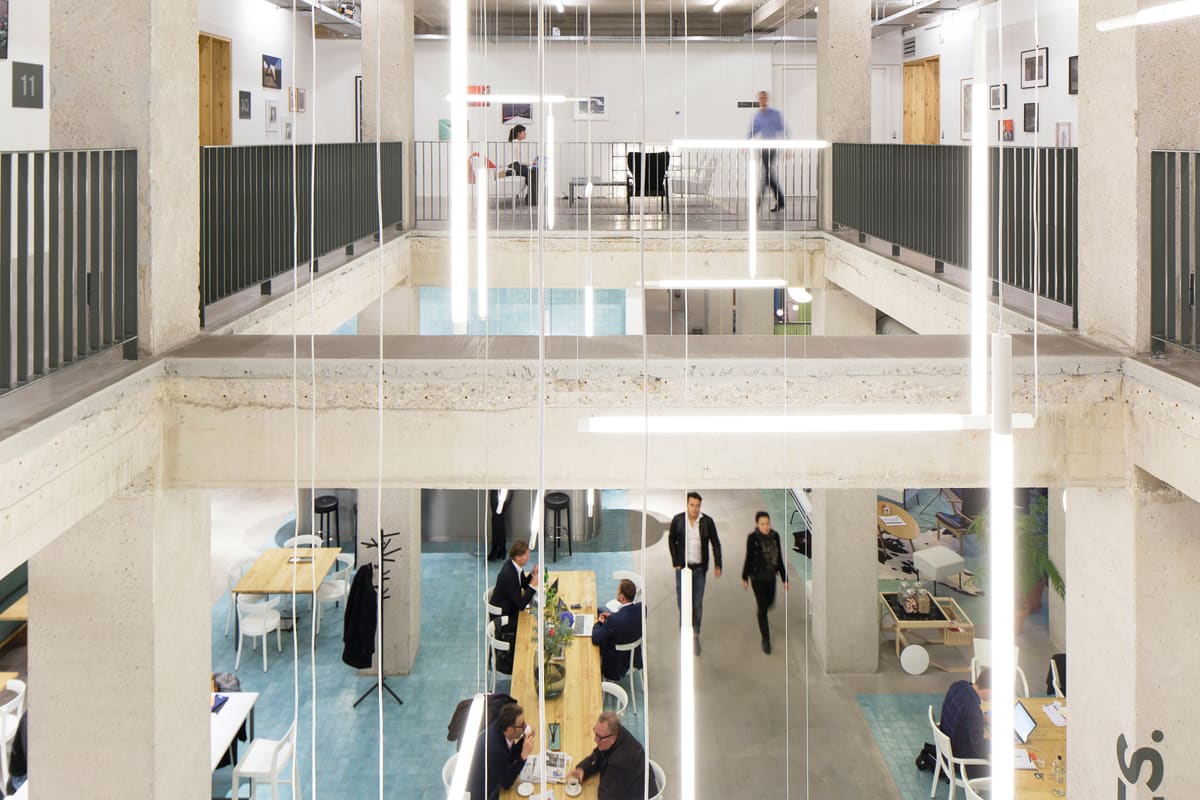

As workers begin heading back to the workplace, here are six tips all landlords should follow before reopening.
After more than a year of working from home, many companies will soon be directing their employees back to the office – even if it’s only for part of the working week, under a new hybrid or hub-and-spoke model.
For landlords, that means buildings that have largely been shuttered, and in many cases almost empty during the pandemic, are now seeing growing daily footfall.
Consequently, it’s time to think about how everyone can be kept safe – because, while the pandemic is receding, reducing the spread of Covid-19 is still a key public health concern.
Here are six tips that all landlords should follow before reopening their doors to tenants.
- Conduct a risk assessment
No landlord wants to be blamed for someone catching Covid-19, but the extent of your responsibility will depend upon how your premises are occupied.
Landlords are generally responsible for the structure of a building and its common parts, including lobbies, stairwells and lifts, unless there’s a single tenant who is contractually in charge of the whole building.
Where there are multiple tenants, the landlord may have additional responsibility for shared facilities such as kitchen areas and toilets. If you own a serviced office, your obligations may go further. “In this scenario, a landlord is very likely to have retained responsibility and liability for compliance with statutory health and safety legislation, and will have a duty to make the premises safe for the occupiers,” say Rachel Francis-Lang and Shalina Crossley at lawyers Lewis Silkin.
Follow guidance from your local health authority on how to conduct a Covid-19 risk assessment and what it should cover. Once this has been completed, you’ll need to prioritise any work that must be carried out to make your building safer. You will also have to communicate any plans to your tenants.
- Enact social distancing measures
One of the key ways landlords can make a difference, in terms of the spread of Covid-19, is by ensuring social distancing.
“Landlords will need to ensure that lifts are not overcrowded and that people do not congregate in lift lobbies or other common parts,” says law firm Pinsent Masons. “For offices this may mean staggering the times at which people arrive.”
You may also want to install screens for receptionists in your main lobby, and to mark the appropriate distance for individuals to maintain on floors and carpets.
In addition, you should put up signs that make these measures clear to everyone who enters the building.
- Make provision for sanitising
Cleaning common areas and maintaining a good level of hygiene is a basic expectation for any building owner in the new world of work.
Some landlords are stepping up their cleaning schedules to increase frequency, providing tenants and their employees with extra peace of mind. Ensuring that hand sanitiser is available near to lifts and other points of contact is also a good idea.
If you’re keen to go further, you could have door handles, hand rails and other frequently touched surfaces spray-coated with copper, which has strong anti-microbial properties. Some hospitals have already done this for the sake of reducing the risk of cross-contamination.
- Go touch-free wherever possible
One simple way to reduce the need for physical contact for your tenants is to leave doors open wherever it is possible and practical.
A more sophisticated approach is to deploy touch-free technology. “Building owners and office users have begun to step up their use of motion sensor and/or voice command technology to allow for touchless operation of elements such as doors, elevators, lights and sinks,” says Marc DeLuca, regional president for Virginia-based KBS Realty Advisors.
- Focus on ventilation
It’s become clear during the pandemic that the greatest risk of infection with Covid-19 comes from airborne transmission.
The UK Health and Safety Executive advises that buildings should be ventilated by opening windows and adds: “Switch heating ventilation and air conditioning (HVAC) systems to drawing in fresh air where possible, rather than recirculating air.”
- Talk to tenants
Managing the risk of Covid-19 means working closely with your tenants, so make sure you talk to them about the measures you’re taking and anything additional they need to do.
Tenants may also want to carry out alterations of their own, such as building cubicles or installing screens in order to maintain social distancing. These may be adjustments that have to be discussed under the terms of their lease.
“Many leases allow internal non-structural alterations without consent, so alterations such as moving desks further apart or installing demountable partitioning to create individual spaces may not need [written permission],” says Pinsent Masons. “However, more substantial works such as changing access arrangements [might].”
Above all, perhaps, landlords should be prepared to be flexible. While the world of work has changed significantly during the pandemic, corporates still need their HQs and home workers are keen to get out of their bedrooms and back into flexspaces. Getting your tenants safely back to the office is a win for everyone.
Flexible workspace is the fastest-growing sector of the global workplace market. Make the most of this exciting investment opportunity by partnering with IWG today.