With France, Spain and Ireland just some of the countries clamouring for flexspace as we head into 2021, we look at why and how the market continues to expand across Europe
The pandemic may have temporarily stalled the flexspace market in Europe, but it’s set to play an increasingly important role as companies think about their future, post-Covid-19 office needs.
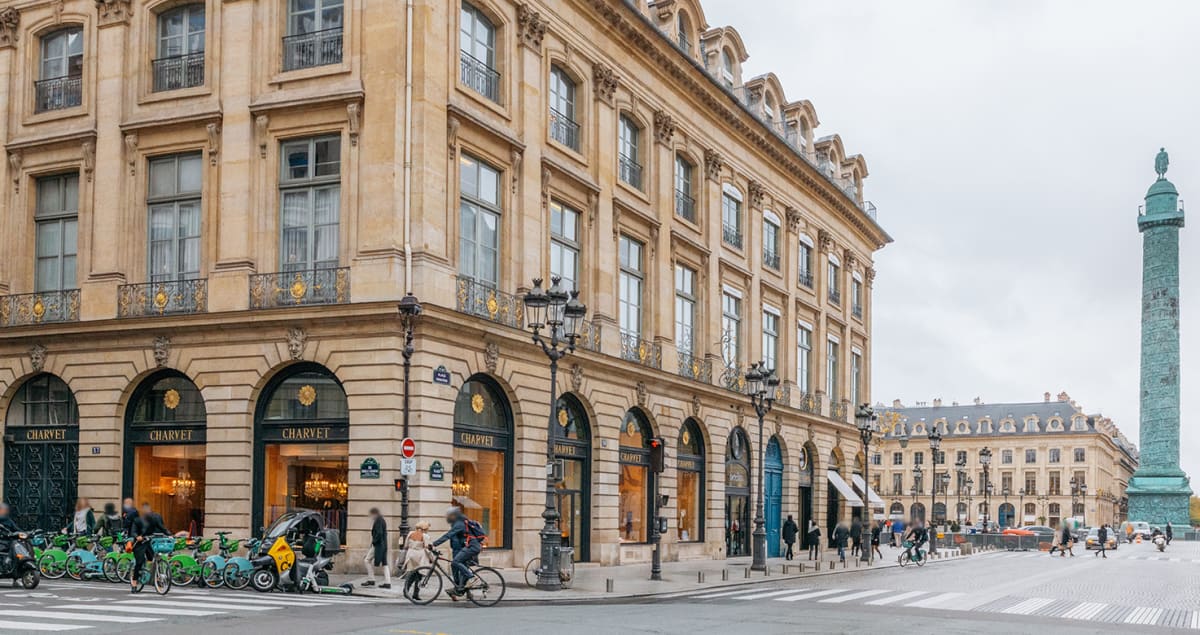
A 2020 report by Savills shows that, over the past five years, about 2.5m sq m of office space has been leased to flexible office providers across the 12 European markets monitored by the real estate provider. In 2019, the share of flexible office takeup was at 9.5%. The city with the highest share was Paris (inner city) at 25.6%, followed by London City at 23%, Barcelona at 18.1% and London West End at 15%.
In Dublin and Stockholm long leases and expensive rents have shifted some occupiers towards more flexible property solutions and they are already dynamic flexspace markets (11% and 25% share of take-up respectively). Meanwhile, in Warsaw and Amsterdam the share of flexspace takeup was at 13% and 9% respectively.
IWG’s own research shows that both Birmingham and Manchester in the UK have seen growth – part of a wider trend for interest in flexible office space outside the big cities. “[We’ve seen] a pivot into the suburbs and the rings round London, Birmingham and Manchester,” said CEO Mark Dixon. Two-thirds of IWG’s 3,500 offices around the world are in suburbs and smaller towns, and one third in bigger cities. In the UK alone, 60% of IWG’s 350 offices are in suburban areas or small towns.
The story is the same in France, where Lyon, Toulouse, Marseille and Bordeaux are reported to be among the front-runners in flexspace takeup.
Richard Holberton, Head of CBRE Occupier Research EMEA, said: “Corporate appetite for flexible space continues to strengthen and, as a result, the stock of flexible offices is expanding across a number of major European cities.”
Prospects for growth
The pandemic accelerated the trend to hybrid working, which before the crisis was already set to pump at least £12 billion into local economies over the next 10 years, according to IWG’s Suburban Economic Survey.
“What we are seeing is increased demand from businesses who have learned from the last ten months. They want to keep the benefits of flexible working because they know that it will maximise staff productivity and reduce their overheads,” says Julian Chambers, Head of Franchise at IWG. “This demand to work in a new way is defined by a combination of working locations. For many businesses this still means a central city office, but it is also a space to work from home, along with flexible workspaces that are somewhere in between the two.”
Research by Colliers International in October 2020 shows that, although there was a sharp drop in new space coming on stream across Europe during the early days of the pandemic, the prospects for growth to quickly resume in 2021 are strong. In the first six months of 2020, says Colliers, some 330,000sq m of new flexible workspace was committed to by operators and landlords across the 42 surveyed markets in Europe – down 50% on the previous year as operators put expansion plans on hold in response to the pandemic.
Nevertheless flex’s share of office space still increased in that period, and Tom Sleigh, head of flexible workspace consulting, EMEA at Colliers, says: “As enterprise occupiers evaluate their real estate decisions and adjust their strategies, we expect the flexible workspace sector to be at the forefront of many new solutions.”
“In the medium term, we expect demand to recover, as in times of uncertainty occupiers will be looking for flexibility,” agrees Savills European Research team. It’s perhaps no surprise then that 62% of flexible office providers were optimistic about the prospects for the sector over the next 12 months.
In times of uncertainty, flexibility will be a sought after solution, as businesses might avoid long-term leasing commitments. And with more people working from home regularly, companies may choose to spread their office requirements across traditional and flexible office solutions in different locations. This may also lead to more demand for flexible office space in non-CBD locations and closer to transport hubs.
Looking to the future
According to BNP Paribas Real Estate, cost will be a key factor in driving more companies towards flexible space in the coming years. “Before the health crisis in 2020, companies were already rethinking the layout of their offices by adopting ratios of one workstation to every two or three employees,” says the company.
“It’s common knowledge that the real estate budget is the second largest expenditure after salaries, which explains why many companies are keen to create flexible workspace. In the post-crisis world, the flexible office allows the company not only to optimise its real estate costs but also to gain in adaptability and agility. If required (a new pandemic for example), it would be simpler to make offices more spaced out.”
In a report for Savills, Cal Lee Head of Workthere says: “Looking forward, we expect the popularity of the [European flexspace] sector to intensify as it diversifies its offer. We believe that cities with dynamic economies, which attract innovation and talent can see demand for flexible offices rise up to 15% of the total in the medium term, while in the long term this could increase to 20-25% of the activity, especially in periods of economic growth and business investment.”
It predicts several potential hotspots for flexible office space demand, based on a set of criteria related to economic growth, job creation, innovation, and property market fundamentals. These included London, Paris, Berlin in the top three, followed by Dublin, Stockholm, Warsaw, Frankfurt, Birmingham, Amsterdam, Hamburg.
Find out how IWG is helping thousands of brokers across the world find the right office space for their clients