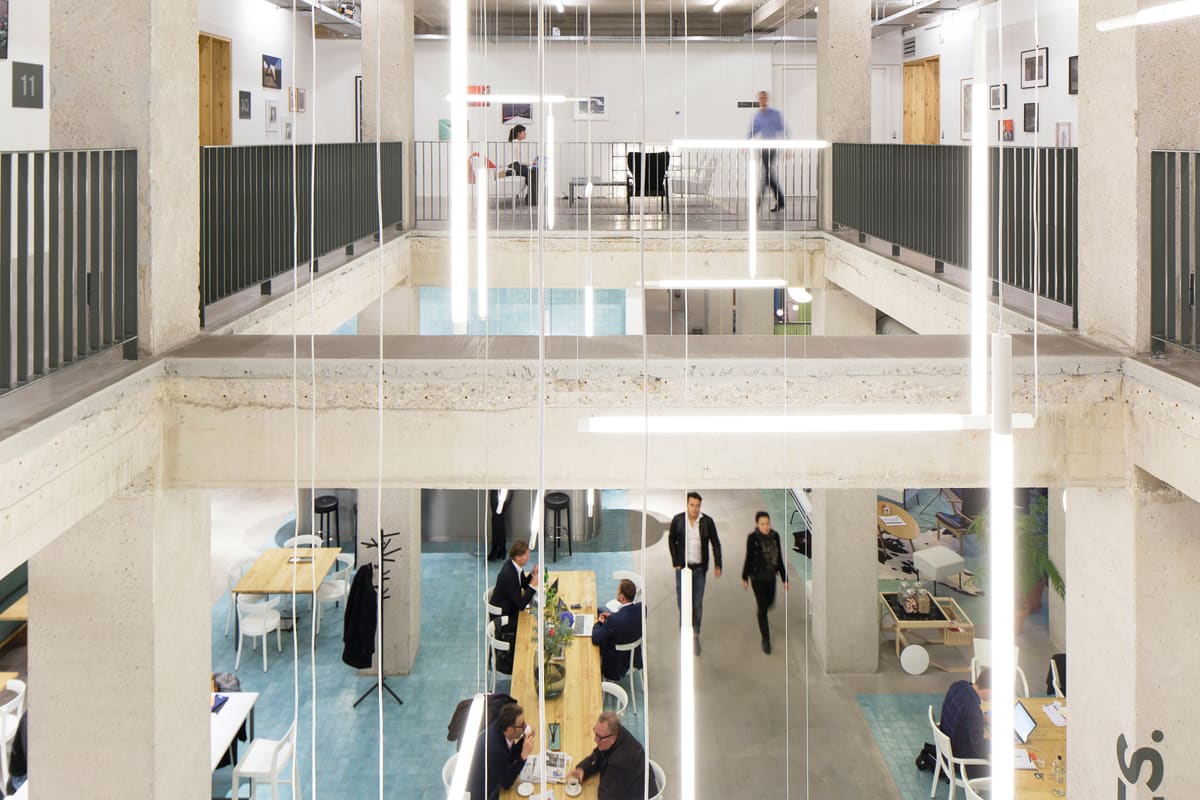

Flexible workspace is on the rise and is set to become an even more important part of the commercial property market in the wake of Covid-19. And, with many choosing to live and work outside city centres, it’s the suburbs that are set to win valuable market share.
- The pandemic has accelerated adoption
Flexible workspace was already on a strong growth curve before the pandemic, with property consultancy JLL forecasting last year that it would take up 30% of total office workspace by the year 2030. Covid-19 has seriously disrupted the office market and has expedited this migration. “The coronavirus pandemic is putting economic pressure on tenants but also making it hard for them to forecast their property needs, which is driving a preference for flexible space,” said the company.
Rival CBRE adds: “There has been a significant acceleration of the decade-old trend towards greater workplace flexibility.” Its client survey in June 2020 found that 33% of US firms are actively considering more use of flexible workspace. And there’s been evidence of similar growth under way in markets as far apart as Germany and India.
“We can all be cautiously optimistic for the future of the [flexspace] sector,” says workspace innovation group, Instant, in its recent publication, The UK Flex Market Report,
- It’s what employers – and employees – want
During turbulent and economically uncertain times, companies want to clamp down on costs. Committing to long-term leases or the expensive fit-out of a new building when you don’t know what your headcount is going to be in a year’s time looks like folly. And workers have shown in repeated surveys that they want to work more flexibly in future. A multinational survey of 8,000 office workers in eight countries by global HR and recruitment firm Adecco, meanwhile, found that 75% want to work more flexibly in future.
- There’s been a pivot to the suburbs
Since lockdowns began around the world in 2020, suburban office space is winning out at the expense of city centres. That’s partly down to growing adoption of the hub-and-spoke model, whereby companies have a smaller corporate office and multiple satellite offices that are geographically distributed. Workplace operators have seen direct evidence of this trend. IWG recently reported a 30% drop in deals in downtown New York at the same time as those in Southern Connecticut rose by 40%.
“What we are seeing is a rise in demand within the smaller, regional markets, with the highest demand growth of all being within tertiary markets,” adds Instant.
- It’s underpinned by population/living shifts
When it comes to choosing where to live, there’s also been an exodus from city centres to the suburbs. Research by the Brookings Institute in Washington, D.C. in May 2019 found that suburbs were overtaking US cities in population growth. And a similar shift has been observed in the UK. This phenomenon has been labelled the Millennial Exodus and is another trend that has been accelerated by the pandemic, with many city dwellers looking to move away from city centres and crowded mass transit systems in search of homes with more space.
As the transition from working from home continues, suburban flexspace will offer these workers the opportunity to get back to the workplace, but with only a short commute from their home.
- It’s an opportunity for operators, brokers and investors
As the early wave of flexspace offices focused largely on city centres and central business districts, creating capacity in suburban locations to meet the growing level of demand will require new development and conversion of existing properties. As CBRE notes: “The quality, unit size and availability of office real estate outside of CBDs is not uniform across the US. This could be an area of opportunity as the multi-node concept in real estate evolves.”
Investors are also increasingly focused on opportunities to make money from this segment. “Right now, everyone is being forced to question which models for flexspace work, especially when and why,” says Ben Munn, global head of flexible space at JLL. “They have their magnifying glasses out.” He adds: “The momentum will continue to bring new models, players, and customers into flexspace.”
Find out how IWG is helping property decisions makers to build their workplace strategy
Want to learn more? You might also enjoy these other IWG stories: